
❓ Start With Why
Lead with Why—when they believe, they’ll follow

Words: 888 | Est. Reading Time: 4 mins
💡 Your Quick Takeaways
Communicate ideas using the framework Why > How > What
Why are we doing this?
How will we accomplish this?
What exactly will be done to accomplish this?
This framework allows people to agree with the Why before continuing to the How and What
If they disagree on the Why, you need to spend more time there until they align with you
🔍 Go Deeper
When working on delivering products to customers I struggled to get immediate engagement from some users who had autonomy within their company to say “No” to using our product. These were people who didn’t care about a better way to do things and only wanted to know the “what’s in it for me?”.
We stumbled into a framework that makes sense. It was one of those moments where you say “Why didn’t I think of that sooner?!”
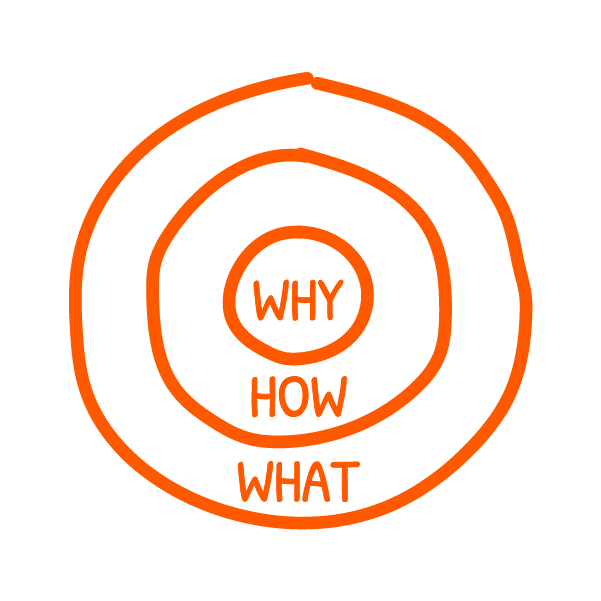
A simple framework of communication that shares Why > How > What:
Why are we doing this?
How will we accomplish this?
What exactly will be done to accomplish this?
With this framework, you can direct entire companies through this and allow ideas to proliferate through promoters within your organization.
So I’ll talk about 2 examples of this framework showing up in the real world.
Also, to give credit where credit is due, I learned about this framework through Simon Sinek’s book appropriately named Start with Why but there is a shorter version available from a Ted Talk he did. Also from Simon is this graphic of the Golden Circle of communication we’ll reference today:
✈️ Southwest Airlines
When Southwest Airlines was founded, it was a time when Americans did not fly on airplanes. About 85% of people did not utilize air travel, it was primarily a method of travel for business or luxury travelers. When most Americans needed to travel long distances, they would pack the car for a road trip or buy a bus ticket.
The founders of Southwest wanted to make travel accessible to the 85% of Americans who didn’t have an easy way to get from A to B. This was their Why.
The Why has nothing to do with being an airline. It has nothing to do with business drivers. It is their plain-stated mission of the vision they want to accomplish.
It is extremely important that you align on the Why before moving to How because if the person you are communicating with does not agree with the Why, they will not agree with the How or What. When a person agrees with your Why, they are now giving you permission to continue sharing your ideas. No one will agree with you, buy your product, or follow you unless they truly believe in your Why.
Now, after the Why comes the How. The How is important because it shares the important goals that need to be accomplished to achieve the Why. This is because everything we do needs to be achieving the Why.
So for Southwest, their why was bringing long-haul travel to 85% of Americans. This required the following:
The product needed to be simple.
At this point, most Americans hadn’t experienced travel without a travel agent. They needed to be able to figure out how to book a ticket without complex thinking.
Southwest had 2 pricing models to start, “Daytime” and “Nights + Weekends”. This kept it simple.
The products need to be fun and exciting.
This would be a product for the everyday person, not someone in a suit but for someone in board shorts and a tank top.
Southwest had fun branding, enthusiastic crews, and spoke like their customers.
The products need to be affordable.
As the champion for an “Every Man”, the products needed to be priced lower than the business or luxury products that were available to 15% of Americans who flew at that time.
Southwest simplified their business model in many ways to allow them to have lower costs which in turn allowed for lower prices for their customers.
These 3 bullets don’t talk about the product Southwest will provide. Southwest could have been a bus company, a taxi company, or even a railway company! They never once mentioned anything about being an airline in their Why or their How.
Being an airline comes when you talk about the What. The What is the thing you will do to accomplish the How that is aligned with the Why.
Southwest’s What is being an airline.
This was their Why > How > What.
💡 Spreading Culture & Ideas
The second example to talk through is using Why > How > What to spread ideas.
How does a great company like Southwest have a legendary culture that every American knows to be friendly, kind, and fair? Through each Southwest crewmember knowing the company’s Why and believing in that Why.
Since every crewmember knows and believes in the Why, they are now able to share that Why with every person they meet. Every action they take will be aligned with that Why.
This is spreading ideas at scale. When someone agrees with the Why, the How, and What will come naturally.
📈 Career Boost
Instead of just sharing an idea, start with the Why behind the goals you want to accomplish
To learn more, watch Simon Sinek’s Ted Talk on Why > How > What
💌 Spread the Word
If you found this valuable, share Gen Z Generalist with friends, teammates, or anyone ready to make an impact. Let’s grow the community of future leaders—one share at a time!